Prof Milos Manic

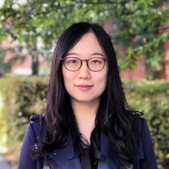
Dr. Qianwen Xu

Associate Professor

KTH Royal Institute of Technology

 
Biography 
 
Qianwen Xu is Associate Professor in Department of Electric Power and Energy Systems, School of Electrical Engineering and Computer Science, KTH Royal Institute of Technology, Sweden. She is the director of Intelligent Sustainable Grid (ISG) Lab @ KTH, and co-director of Dig-it Lab (Vinnova competence center). Her research interests include advanced control, optimization and artificial intelligence application of sustainable power systems, microgrids and power converter dominated grids. She has secured more than 20 competitive research grants from national and international funding agencies as PI. She is Chair in IEEE Power and Energy Society & Power Electronics Society, Sweden, and Vice Chair of IEEE Power Electronics Society Technical Committee (TC) 12- Energy Access and Off-Grid Systems. She is an Associate Editor for IEEE Transactions on Smart Grid, IEEE Transactions on Sustainable Energy, IEEE Transactions on Transportation Electrification, IEEE Transactions on Industrial Informatics. She has received multiple prestigious awards, including IEEE J. David Irwin Early Career Award 2025, and 2026 IEEE PES Outstanding Young Engineer Award.


Title
 
Smart Microgrid for Sustainable and Resilient Communities


Abstract
 
The rapid growth of renewable energy, electric mobility, data centers, and distributed energy resources is fundamentally reshaping modern power systems. At the same time, increasing decentralization, converter penetration, sector coupling, and climate-driven uncertainty are creating unprecedented challenges for grid efficiency, stability, and resilience. Smart microgrids provide a powerful pathway to address these challenges by enabling the flexible integration of clean energy, storage, buildings, transportation, and critical infrastructure. As the fundamental building blocks of future sustainable communities, they are evolving from passive local energy systems into intelligent and autonomous infrastructures. This talk presents our latest advances in intelligent, stable, and resilient microgrids, spanning safe deep reinforcement learning, distributed and robust energy management, AI-enabled stability assessment, and digital-twin-assisted grid restoration. The proposed methods enable economical and privacy-preserving coordination of networked microgrids, real-time stability monitoring of converter-dominated systems, and rapid recovery of critical loads following extreme events. Supported by hardware validation and real-world deployment scenarios, this work demonstrates how artificial intelligence, advanced control, and digital twins can be jointly leveraged to unlock the full potential of smart microgrids and accelerate the transition toward low-carbon, secure, and resilient communities.